Skip to Main Content
Menu

A plain-English guide for New Hampshire

I Got a DWI in New Hampshire. What Happens Next?

Here is the whole process in order. It can feel overwhelming, but it is manageable one step at a time—and Chrysalis has walked people through it since 2009.

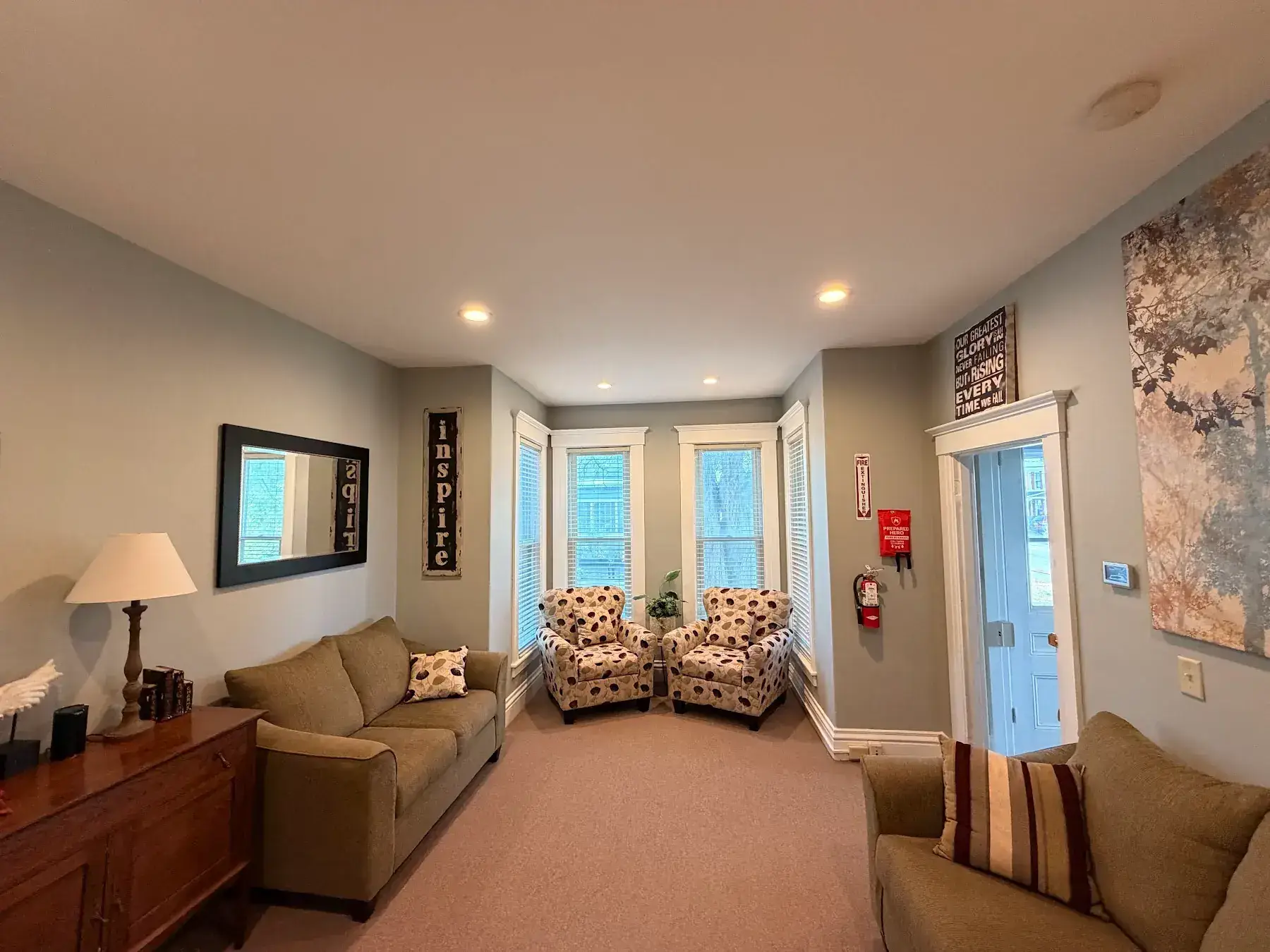
Living room at the Chrysalis Recovery Center office
A calm place to begin

Your next steps, in order

Your exact requirements depend on your court order, DMV record, and service plan. This guide shows how the pieces fit together so you can see what comes next.

  1. 01

    Court — hearing and sentencing

    At your hearing and afterward, the court decides the sentencing conditions in your case. Read your court order carefully: it tells you what the court requires and what may be required before you can seek restoration of driving privileges. Chrysalis can explain the provider-side steps, but court conditions come from the court.

  2. 02

    DMV / Department of Safety — your licence status

    The New Hampshire DMV / Department of Safety handles your licence status, revocation or suspension period, and driving-privilege reinstatement. What you must do depends on your court and DMV records; completing an IDCMP does not replace requirements set by the Department of Safety. The full New Hampshire DWI process guide explains the licence-reinstatement portion in depth.

  3. 03

    IDCMP — the program you must complete

    The Impaired Driver Care Management Program (IDCMP) is New Hampshire’s state-required program for individuals charged with or convicted of impaired driving offenses. It brings together intake, screening, evaluation, education, treatment recommendations, case management, and completion reporting so we can track what your case requires. See how Chrysalis provides IDCMP services.

  4. 04

    Screening and intake — paperwork and first questions

    The IDCMP reviews your paperwork and asks questions about your driving history and current offense, alcohol or drug use, screening tools, and next steps. Documents listed on the site include certified DMV driving record(s), a court order or case summary, chemical test documentation or a refusal form, the arrest report and narrative, your criminal record, and proof of a Victim Impact Panel. Open the required document library for the full checklist.

  5. 05

    Full substance use disorder evaluation

    When screening indicates that one is needed, a full substance use disorder evaluation is conducted by a New Hampshire Licensed Alcohol and Drug Counselor or New Hampshire Master Licensed Alcohol and Drug Counselor. It includes a biopsychosocial assessment, an ASAM Level of Care determination, and a DSM diagnosis. The evaluation identifies the level of care and services that fit your situation; the IDCMP service plan then identifies the treatment provider or referral needed. See the evaluation services.

  6. 06

    Your service plan and recommendations

    After the evaluation, IDCMP clinical staff develop the service plan with you and review it with you before it takes effect. The plan sets out the types and frequencies of required or recommended treatment and recovery services, the timeframe for starting them, any court-ordered or clinically indicated testing, any abstinence monitoring, and the requirement to complete an IDEP. It is your roadmap for meeting court and/or DMV requirements and drives the rest of the process.

  7. 07

    Education — the 20-hour IDEP class

    The 20-hour Impaired Driver Education Program is a required IDCMP component (He-A 508.02(b)). Chrysalis runs it over Zoom; the weeknight format is two weeknights per week for two consecutive weeks, and the current schedule has the dates and times. If you want your workbook mailed to you, book at least 2 weeks ahead; otherwise, workbooks are collected at the Concord office. Read what to expect in the 20-hour class.

  8. 08

    Counselling and aftercare

    Counselling fits wherever your service plan requires treatment or recovery services. You can complete outpatient IDCMP counselling at Chrysalis, and when an evaluation calls for a service we do not provide, we refer you to another agency. After required sessions are complete, aftercare and ongoing support can provide a steady place for connection and accountability; you can also continue outpatient counselling at Chrysalis.

  9. 09

    Victim impact panel

    When the court orders it, you must complete a qualified online victim impact panel programme under RSA 265-A:1, VII; the requirement is described in RSA 265-A:18, I(a)(4-a) and IV(a)(3-a), unless the court determines that exceptional circumstances exist. The panel is separate from the 20-hour IDEP class and is not a prerequisite for scheduling or attending it. You pay the panel provider directly, and Chrysalis does not administer the panel. Read the full Victim Impact Panel explanation.

  10. 10

    Interlock

    An ignition interlock device requires a driver to provide a breath sample before a vehicle will start. If the DMV or court requires one, the device is part of the driving-privilege conditions for that case and is separate from IDCMP services. The DMV or court determines whether an interlock is required and what conditions apply.

  11. 11

    Case management and check-ins

    The IDCMP monitors compliance through case management meetings, which may be face to face or by telephone depending on your needs. Contact is required at least once per month, with biweekly or weekly options when more support is needed; testing is included when the court or service plan requires it. Review compliance and non-compliance requirements.

  12. 12

    Completion and licence reinstatement

    Once required components, fees, and documentation are complete, Chrysalis sends a written completion report to the sentencing court and DMV and enters the information into the state’s electronic records system within 5 business days (He-A 507.07), providing completion documentation. The suspension period must have run out, and if a motion for a reduction in the revocation period was filed, the court order must have reached the DMV before early restoration. If required, you request an SR-22 from your insurer, which files it with the DMV’s Financial Responsibility division; it is proof of financial responsibility, not an insurance policy. You also submit your own Victim Impact Panel certificate to the NH DMV / Department of Safety with your SR-22 proof before reinstatement.

  13. 13
  14. 14

Requirements are set by New Hampshire law. Chrysalis explains them as a provider; clients should confirm their own court and DMV requirements.

A clear next step

Ready to get started?

Begin your intake packet online in just a few minutes, from wherever you are.